
Over the last few weeks, I’ve been delivering a range of training sessions across IPS/SEQF related topics. While the sessions have covered different themes, one idea has repeatedly surfaced: “disclosure” — and more importantly, people’s confidence (or lack of it) in having meaningful conversations around sensitive and difficult topics.
Whether it relates to mental health, physical health, substance use, criminal history, or caring responsibilities, too many people still see disclosure as a simple yes or no question:
“Will you disclose?”
But this binary thinking doesn’t reflect the complexity of real life, or the realities people face when navigating work, recruitment, and support systems.
The Problem With “Yes or No” Disclosure
When we frame disclosure this way, we unintentionally place pressure on individuals to either:
- Share everything, or
- Share nothing
Neither option is helpful.
This approach can lead to:
- Oversharing information that may not be relevant or helpful
- Withholding information that could enable better support
- Increased anxiety and reduced confidence in conversations
Most importantly, it removes choice, control, and nuance from the individual.
A Better Approach: Managing Personal Information
Instead of asking whether someone will disclose, we should be asking:
- What information do you want to share?
- Who do you want to share it with?
- When is the right time to share it?
- Why might it be helpful to share this?
This shifts the conversation from disclosure to managing personal information; which is far more empowering.
Supporting People to Share Effectively
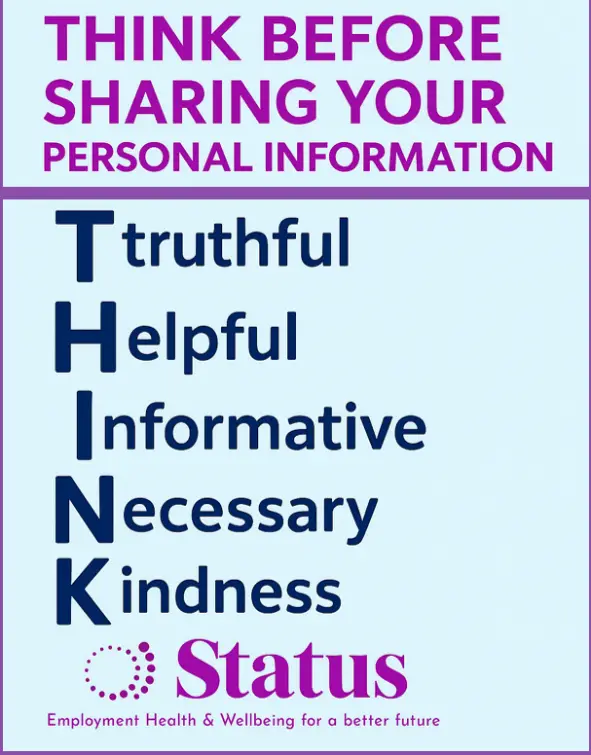
When individuals are thinking about sharing personal or sensitive information particularly during recruitment or employment it can be helpful to reflect on a few key principles:
Be Truthful
Information shared should always be accurate and honest. Trust is essential in any professional relationship.
Be Helpful
Ask: Does sharing this information support employee or the employer? If it doesn’t add value or improve understanding, it may not need to be shared.
Be Informative
Provide the right level of detail — not too little, not too much. The goal is clarity, not complexity.
Be Necessary
Consider whether the information is required in that context. Does the person you’re telling actually need to know?
Encourage Kindness
How information is shared and how it is received matters.
We should be fostering environments where people feel safe, respected, and understood.
Building Confidence in Difficult Conversations
For many people, the real challenge isn’t the information itself it’s the conversation.
We need to move away from:
- Fear-driven decision making
- Tick-box approaches to disclosure
- “All or nothing” thinking
And instead, support people to:
- Understand their options
- Communicate with confidence
- Take control of their own narrative
A Shift in Practice
As practitioners, advisors, and employers, we need to reconsider the language we use.
Instead of asking:
“Will you disclose?”
We should be asking:
“How can you manage your personal information in a way that works for you?”
This is a small shift in wording — but a significant shift in mindset.
Final Thought
Disclosure isn’t a moment. It’s a process.
And when we move beyond the idea of disclosure as a simple yes/no decision, we open the door to more meaningful, supportive, and human conversations.
Let’s stop asking people if they will disclose — and start supporting them to manage their personal information with confidence, purpose, and dignity.
Supported Employment Trainer & Consultant